Why I am not a poet.
Satine, Venice
31 May 2025 – 27 July 2025
Text by Agnieszka Polska
“Why am I not a ghost,” asks Sofia Stevi in one of the titles of her new paintings. This question is formulated in a manner that might remind us of predictive text feature in a web browser search bar: “Why am I not a g… – good person? Girly girl? Good mom? Getting a period?”. But Stevi’s inquiry is perplexing. Does she wish to be a specter? Does she feel a necessity to prove she is not one?
As Derrida’s hauntology taught us, a specter is neither fully alive nor fully dead—it destabilizes binaries like real and imaginary, past and present. It contaminates present by the past – traumas, unrealised dreams – and haunts by reminding us of the future that was once promised but never arrived.
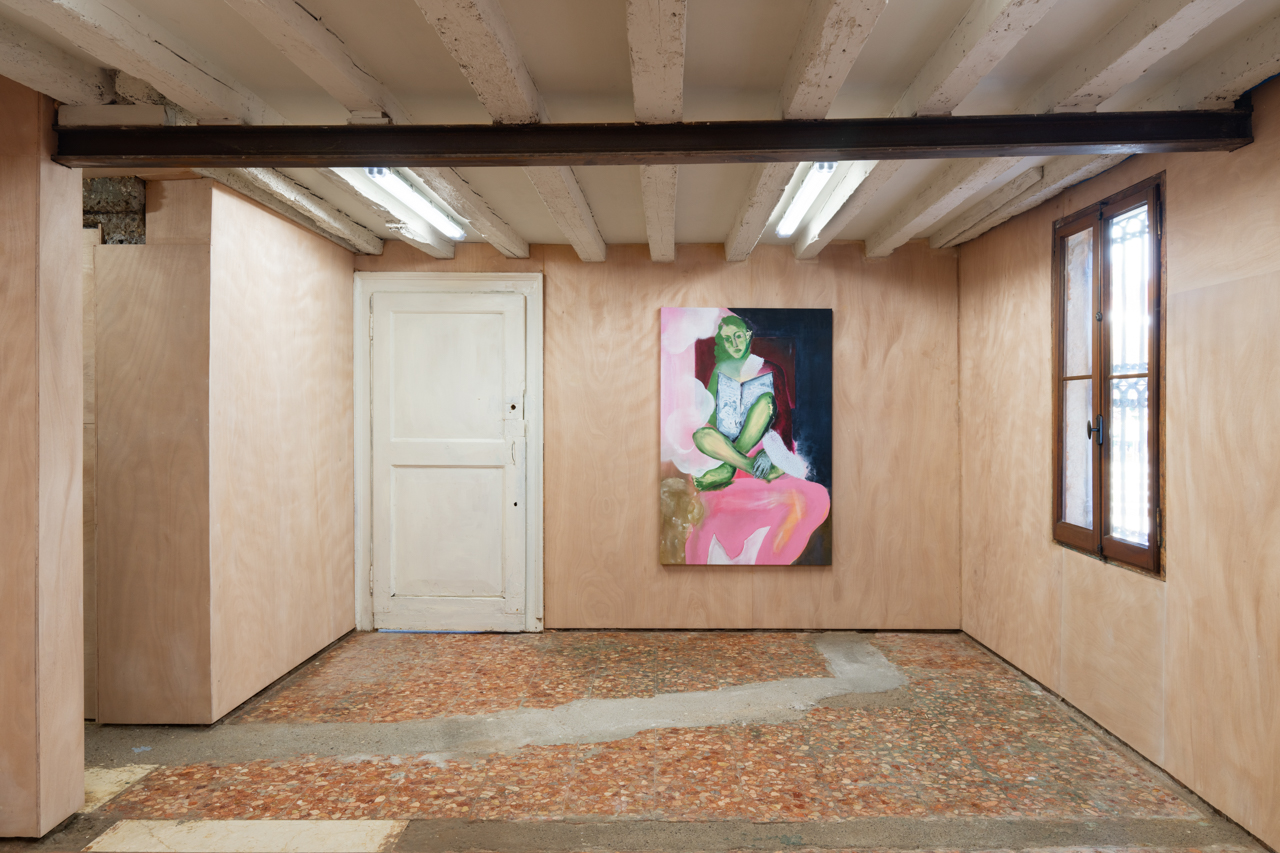
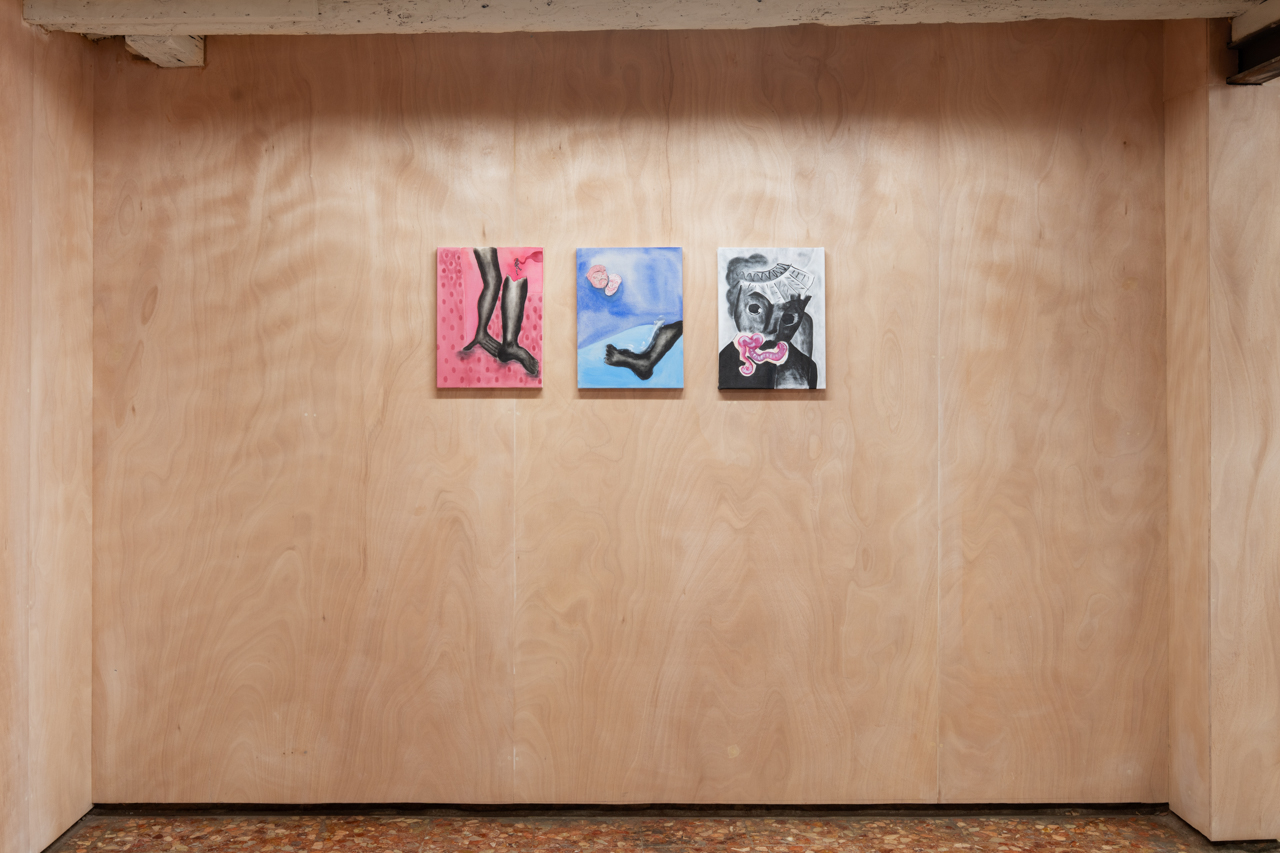
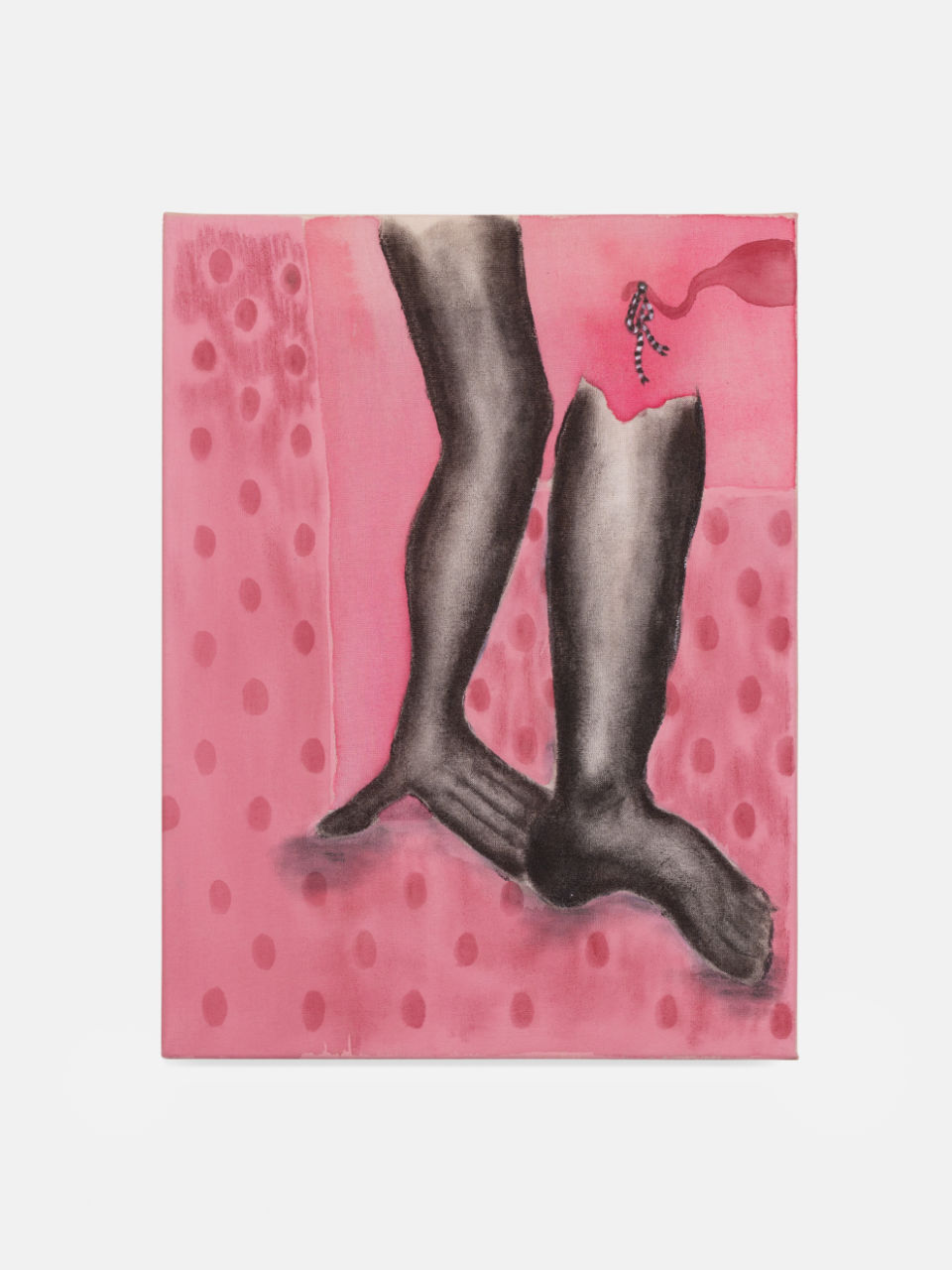
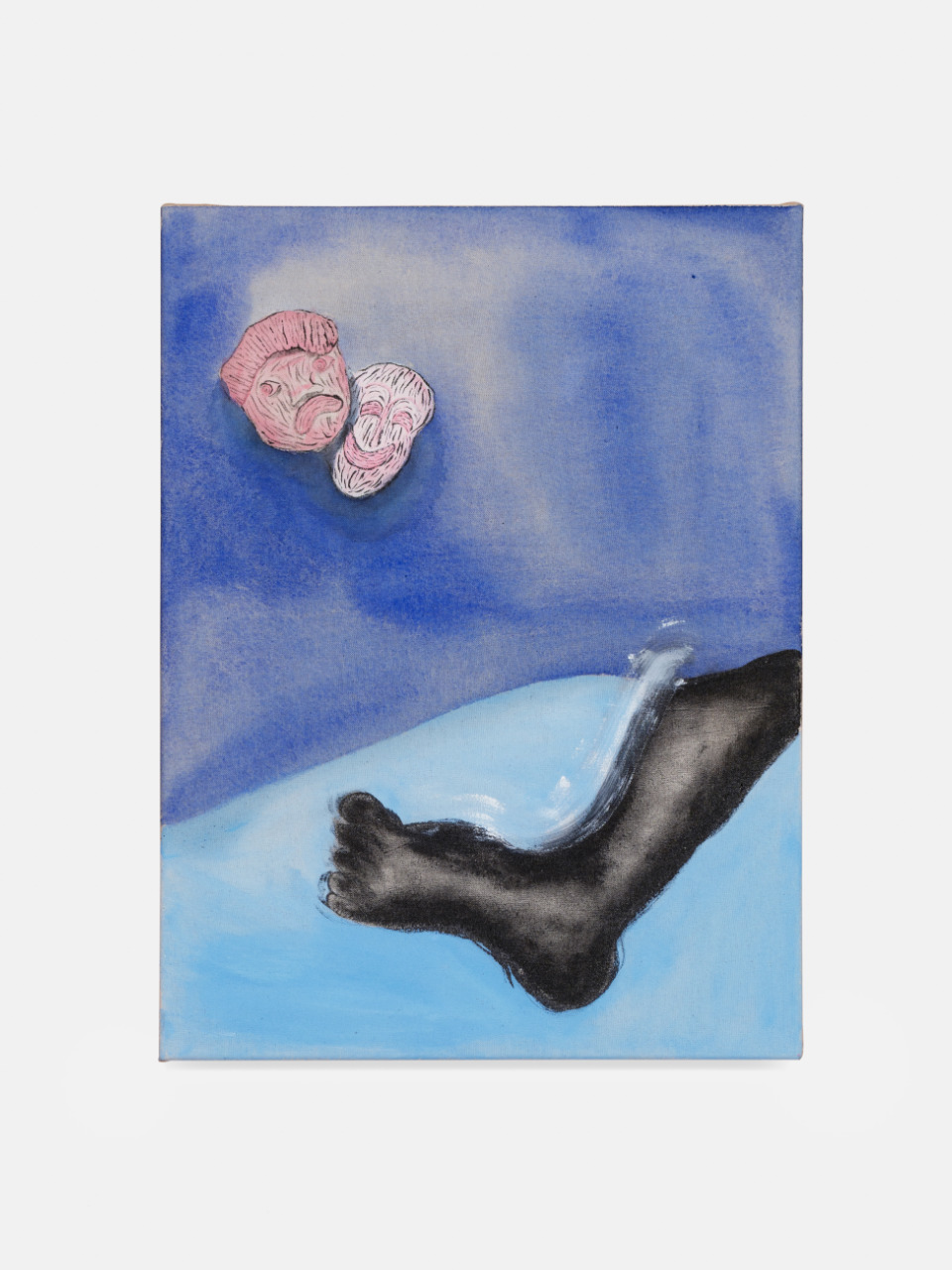
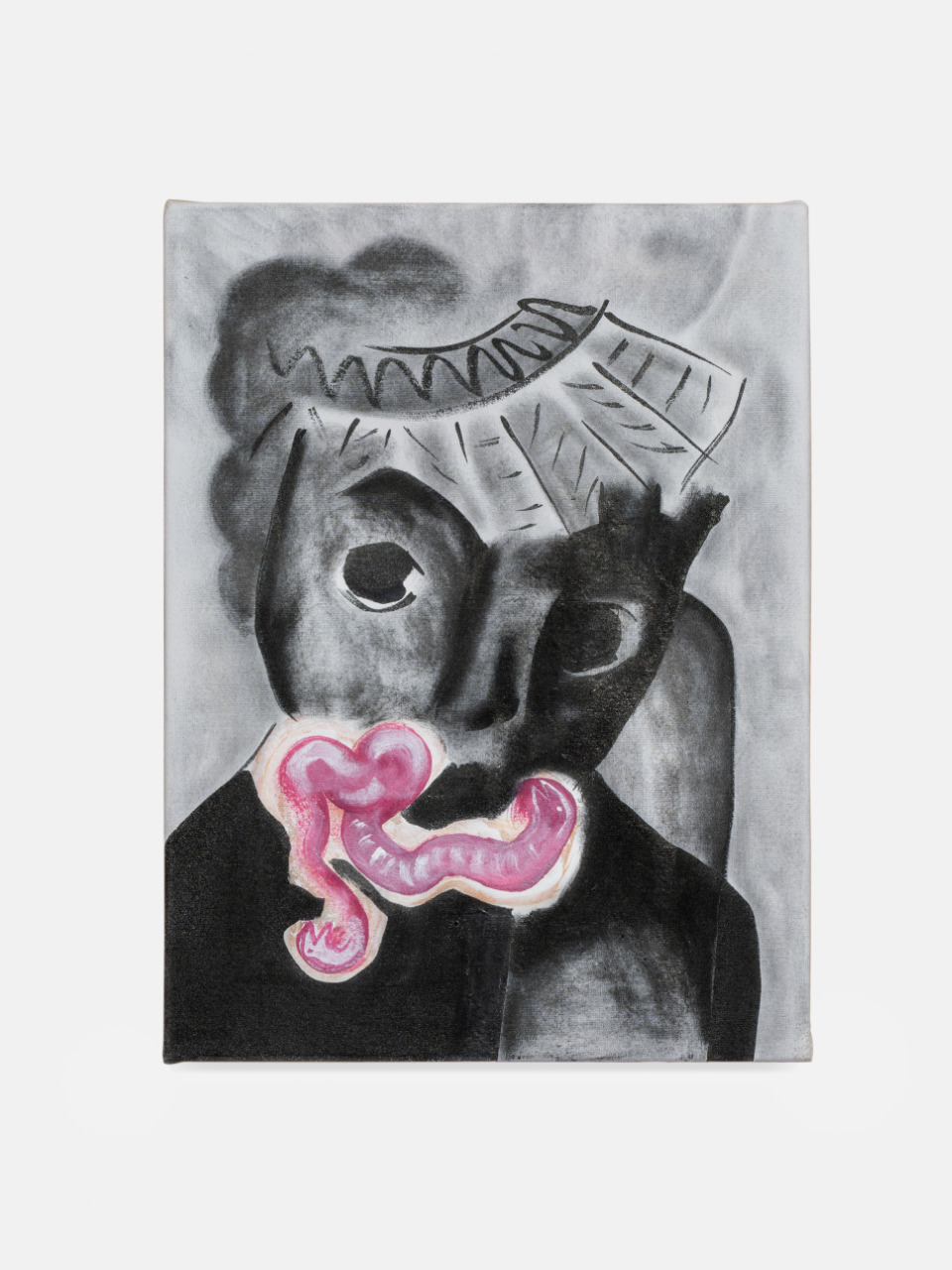
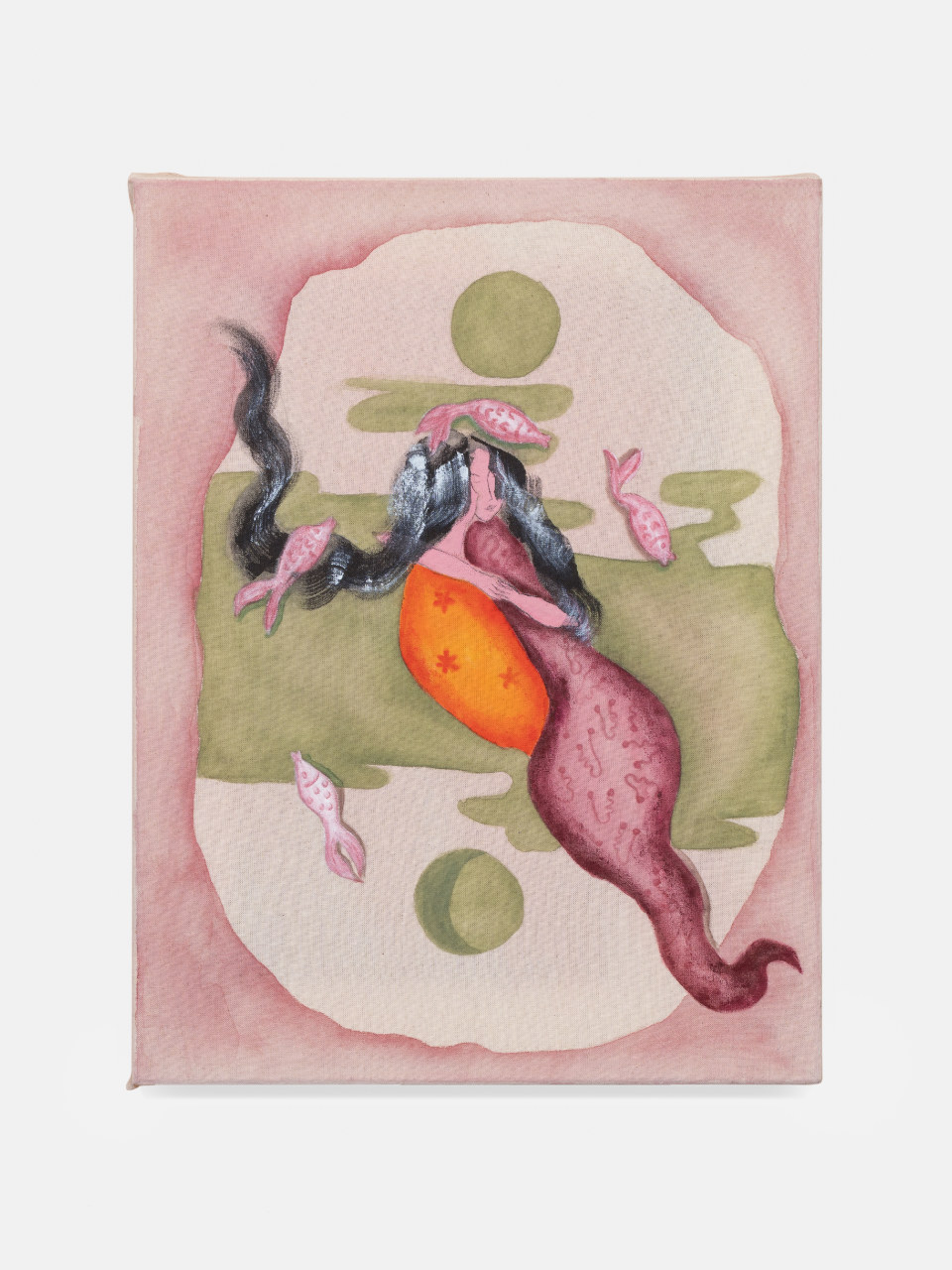
Stevi’s paintings seem to collect all the spectral binaries. They depict objects, persons and beings that are present, but absent; absent, but promising to return; undecidable; symbolic, but ambiguous in their references. A tour through her exhibition feels like sleep-walking: dream-like sequences of almost-familiar figures and inffable emotional states, smoothly blending into one another, triggering obscure memories of joy and sorrow alike.
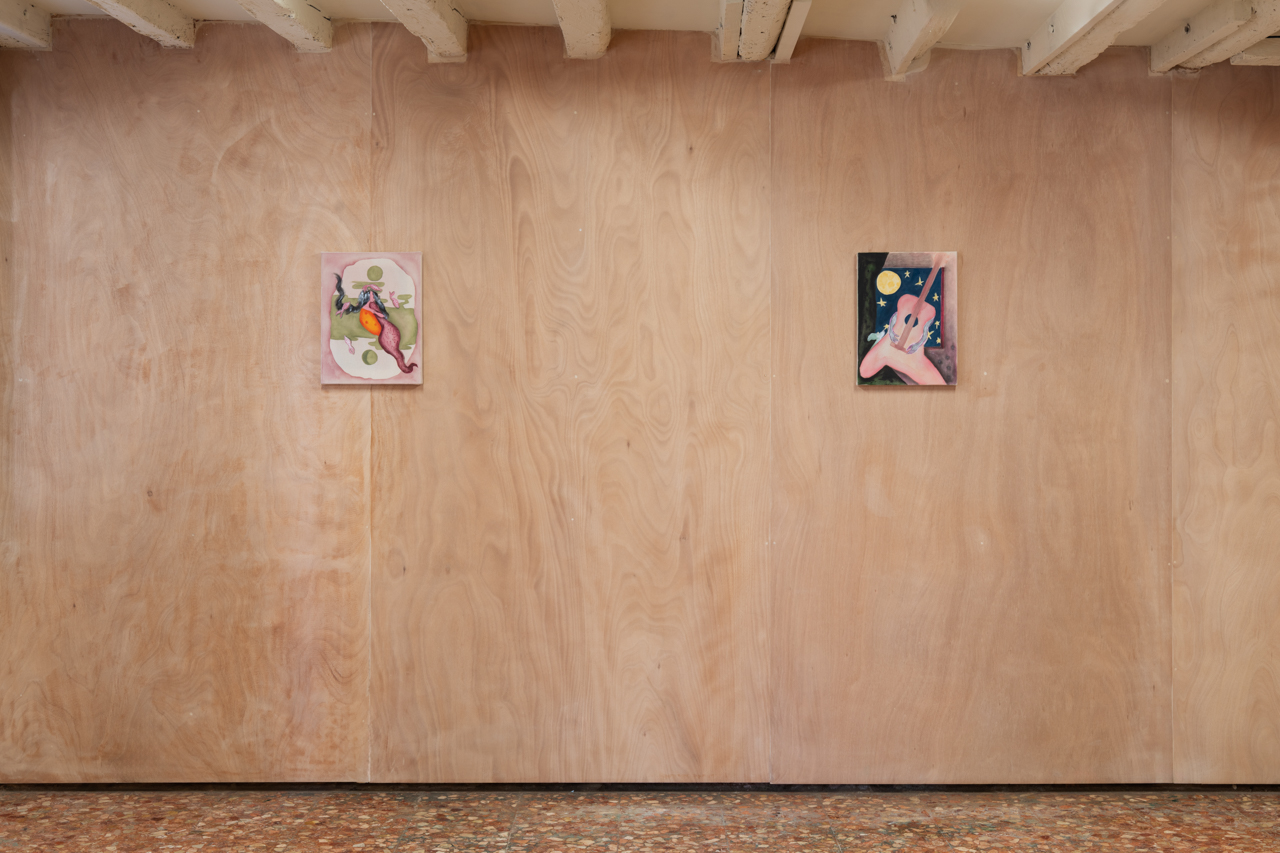
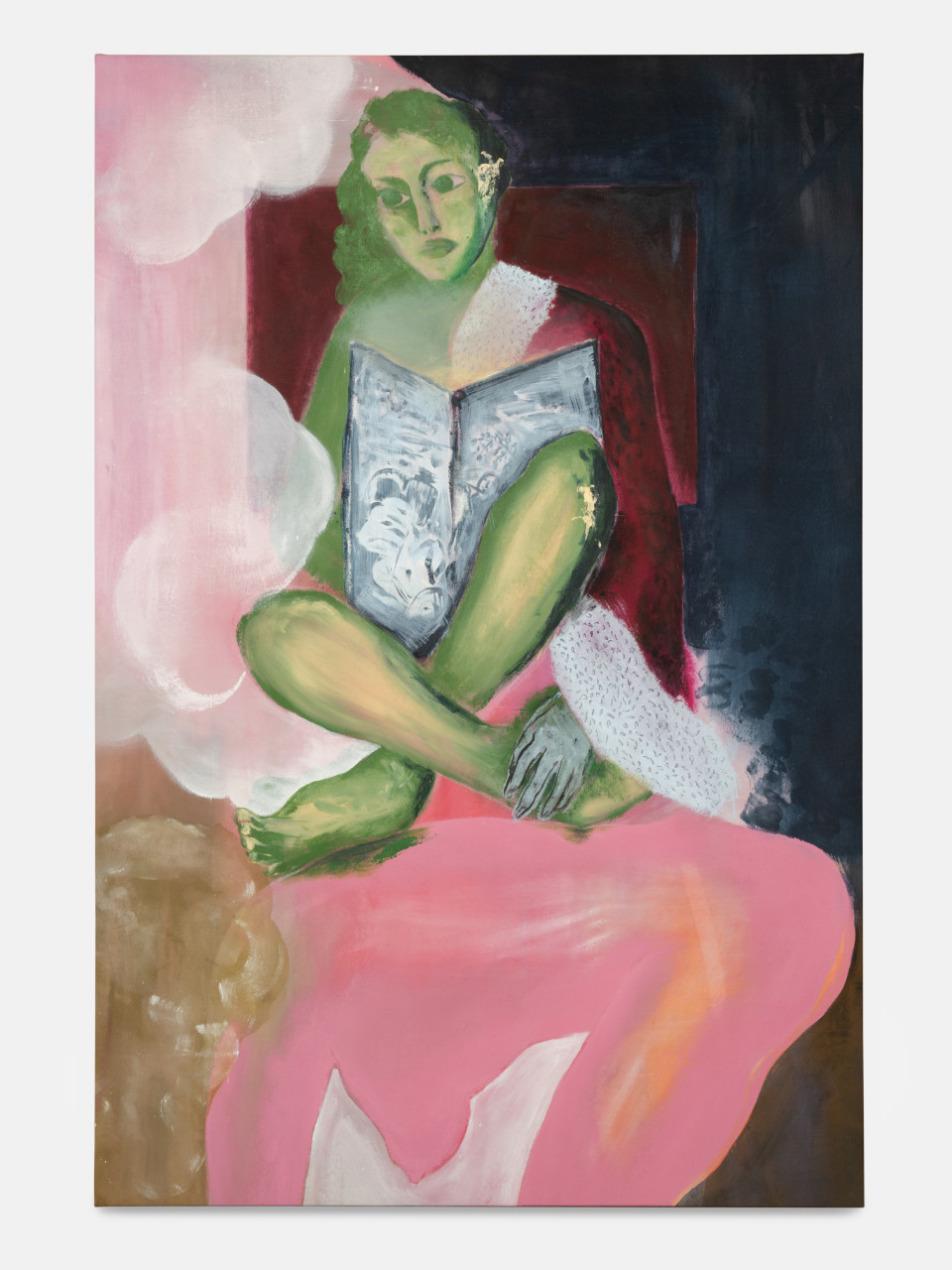
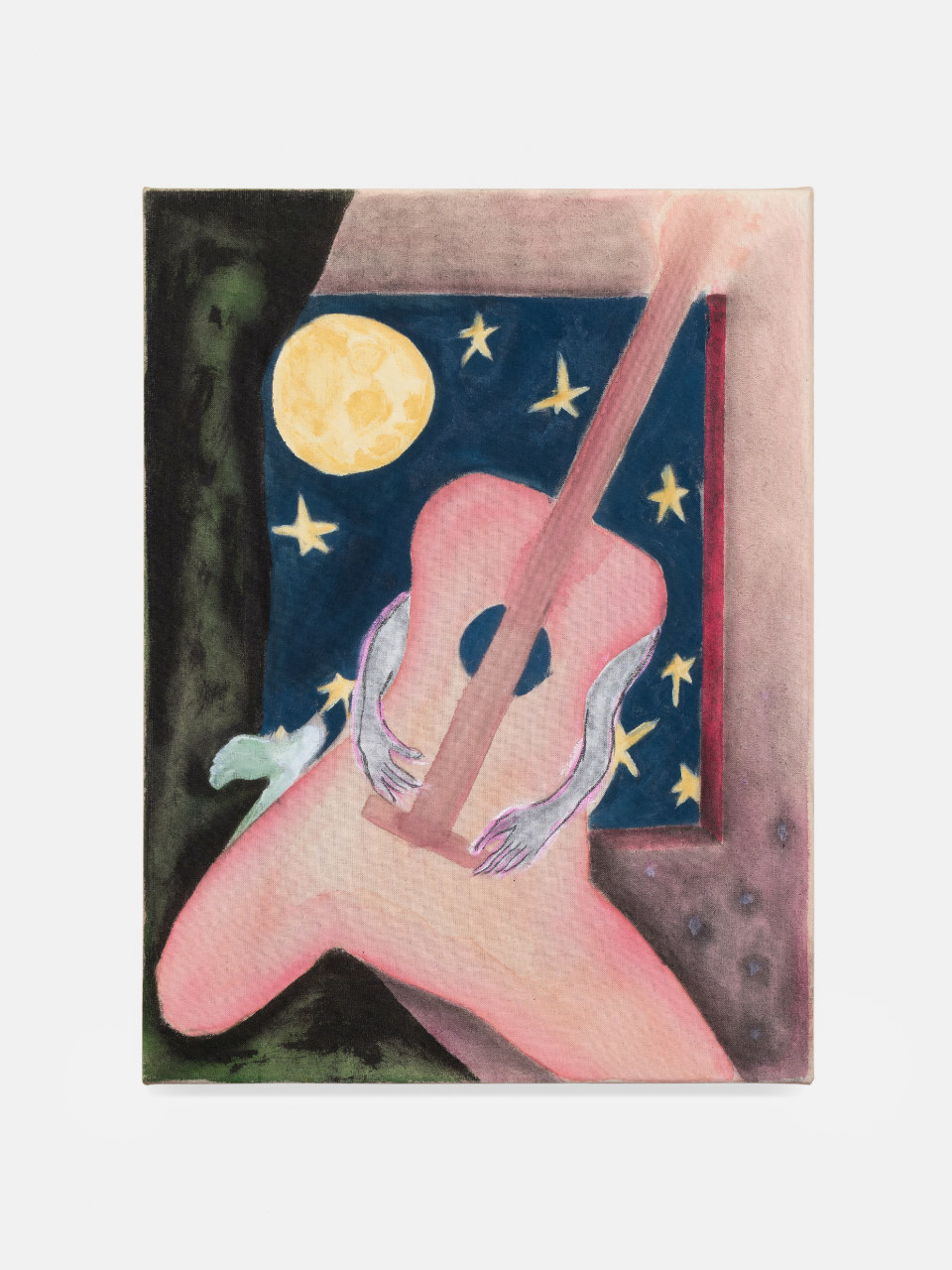
The richness of symbols may remind us of the visual, deeply coded langu ge of Medieval art: complex, abstract ideas such as divinity, mortality, or death condensed in everyday objects and animals. There is a guitar, plucking its own strings with ghostly hands. Snakes tied by their tails into a knot. A royal mantle of red velvet lined with ermine covering otherwise naked body of a pensive woman. Unlike the Medieval code, legible to viewers familiar with religious or cultural references of the time, Stevi’s code signs seem to have lost their referents and became free-floating. Yet, even without its cryptographic encryption key, Stevi’s imagery is not undecipherable – it communicates with pure adjective depth, “disclosing a space of meaning that is neither preexistent in nature nor based on a social convention.” Franco Bifo Berardi’s explanation of the workings of poetry seem to perfectly fit Stevi’s paintings. “The poet cal act is a semiotic excess hinting beyond the limit of conventional meaning, and simultaneously it is a revelation of a possible sphere of experience not yet experienced (that
is to say, the experienceable). It acts on the limit between the conscious and the unconscious in such a way that this limit is displaced and parts of the unconscious landscape—of what Freud called the “inner foreign country”—are illuminated (or distorted) and resignified.”
In one of the most prominent paintings in Stevi’s exhibition, titled “Feed me”, a man and a woman are sharing a moment of disturbing intimacy. The woman lies with her eyes closed, asleep or dead, her still body rendered in pale pinks dissolving into blank background of gesso. Her lover suckles her breast with an expression of unsettling intent — a gesture that evokes need, dominance, but also desperation.
The painting reimagines Francisco Goya’s The Disasters of War, specifically referencing plate 39, The Consequences. In the original print, a bat-like, demonic creature feasts on a corpse or a collapsed victim, sucking the breast or tearing flesh o” the ribcage. Stevi translates Goya’s explicit horror into a scene of sinister intimacy, where political is replaced by private and unconscious. In fact, against all odds, human art history is abundant in imagery of adults breastfeeding adults, thanks to numerous depictions of Roman Charity (Caritas Romana). In this classical story from ancient Roman lore, a young woman secretly breastfeeds her father, who has been sentenced to death by starvation in prison – becoming a symbol of sacrifice and bodily transgression. Caritas Romana’s woman suckling an old man, Goya’s demon breastfed by a corpse, Stevi’s deeply ambiguous depiction of a possible sexual play – are all shocking, in each case rendering female body as food and subsistence. This food may be offered – or may be taken by force.
Here, ghosts appear again, not only as reminders of past traumas and unrealised futures. To be haunted is to be called into responsibility – and a demand for justice is part of writing history, mourning, and reconciliation.


Photography by Filippo Rossi / Marco Cappelletti Studio